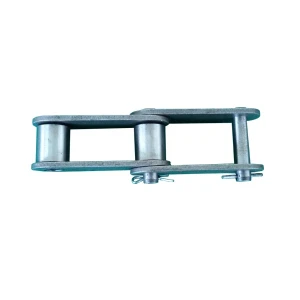
Driving Chains for Heavy-Duty Power Transmission & Precision Drives


Driving chains transmit mechanical power between parallel shafts through positive engagement with sprockets. Designed for controlled speed and torque transfer, they support conveyors, agricultural machinery, industrial equipment, material handling systems, and other power transmission applications.
 
First 12 Last 1/2


Product Range


Standard & Precision Driving Chains

Short Pitch Roller Chains Conveyor Chain
Short Pitch Precision Roller Chain
B Series Short Pitch Chain Simplex Transmission Roller Chain
Single-standard Roller Chains
B Series Industrial Driving Roller Chains
Industrial Driving Roller Chains

Double Pitch & Attachment Chains

Double Pitch Roller Chains
Double Pitch Attachment Conveyor Chain
Hollow Pin Conveyor Chain
Transmission Conveyor Roller Chain

B Series Short Pitch Chain Simplex Transmission Roller Chain
Agriculture Chain Lumber-Wood Chains

Heavy-Duty & Agricultural Chains

Heavy Duty Roller Chain
Heavy Duty Cranked Chains
Agriculture Chain Lumber-Wood Chains
Wheat Harvester Chain Roller Chain

Application-Specific Driving Chains

Industrial Roller Chain 06B For Face Mask Machine


Technical Specifications


Parameter

Specification / Options

Chain Type

Short Pitch Roller Chain, Double Pitch Roller Chain, Heavy Duty Roller Chain, Cranked Link Chain, Attachment Chain

Pitch

12.7–152.4 mm, depending on chain series

Material

Carbon Steel, Alloy Steel, Stainless Steel

Heat Treatment

Carburizing, Case Hardening, Induction Hardening

Surface Treatment

Zinc Plating, Nickel Plating, Dacromet, Black Oxide

Attachment Options

Extended Pins, K1, K2, M1, Hollow Pins, Custom Attachments

Standards

ANSI, ISO, BS, DIN, according to chain series

Ultimate Tensile Strength

Up to 150+ kN, depending on series and configuration


Driving Chain Components


Component

Function

Inner & Outer Plates

Connect chain components and provide the structural strength of each link.

Pins

Connect the inner and outer links and allow the chain to articulate around sprockets.

Bushings

Provide the bearing surface between pins and rollers, reducing friction and wear.

Rollers

Rotate against the sprocket teeth to reduce contact friction and support smooth engagement.

Sprockets

Engage with the rollers to transmit torque and control the chain speed ratio.


Selection Matrix


Design Parameter

Selection & Engineering Logic

Working Load & Torque

Match chain pitch and link tensile strength to operating torque, dynamic shock loads, and required service factor.

Operating Speed & Ratio

Select standard or short pitch series for higher RPM; size sprockets by tooth count to achieve the target transmission ratio.

Center Distance

Use standard pitch for short spans; double pitch for longer shaft centers to optimize system weight and cost.

Operating Environment

Carbon Steel: General dry drives.

Alloy Steel: High-impact and heavy-load applications.

304/316 Stainless Steel: Corrosive, humid, or high-temperature environments.

Sprocket Match & Alignment

Verify chain pitch, roller diameter, and sprocket tooth profile; ensure parallel shaft alignment to reduce edge wear and uneven chain loading.

Special Mounts / Attachments

Specify hollow pins, extended pins, or side attachments when indexing, fixture mounting, or product handling is required.


Manufacturing & Quality Assurance
 
01/

Raw Material Verification: Incoming steel materials are checked against specified material requirements before production.

02/

Dimensional Inspection: Critical dimensions including pitch, roller diameter, inner width, plate dimensions, and attachment geometry are checked during production.

03/

Heat Treatment Control: Mesh-belt heat treatment equipment is used to control hardness and mechanical properties according to product requirements.

04/

Hardness Testing: Pins, bushings, plates, and other critical components can be checked for specified hardness requirements.

05/

Assembly Inspection: Chain assembly is checked for articulation, component fit, and overall dimensional consistency.

06/

Final Quality Inspection: Finished chains are inspected against order specifications before shipment.


OEM & Custom Engineering


Custom Dimensions:

Non-standard pitch, plate dimensions, roller diameter, inner width, and overall chain dimensions.

01

Attachment Engineering:

Extended pins, attachment plates, K2 configurations, special mounting holes, and customized attachment spacing.

02

Material & Treatment:

Carbon steel, alloy steel, stainless steel, and application-specific heat or surface treatments.

03

Replacement Manufacturing:

Existing chain samples or dimensional information can be used for replacement-chain production.

04

OEM Support:

Contract manufacturing, buyer-label production, custom packaging, and application-specific engineering support.

05


Driving Chain Maintenance

Wear Inspection
Inspect rollers, pins, bushings, plates, and sprocket teeth for abnormal wear, corrosion, cracking, or deformation. Measure chain elongation when required to determine replacement timing.


Sprocket Inspection
Check sprocket tooth wear and alignment together with the chain. Replacing a severely worn chain without addressing worn sprockets can accelerate wear on the new chain.

Lubrication

Apply a suitable chain lubricant to the pin, bushing, and roller areas. Lubrication reduces friction, wear, and corrosion during operation.

Cleaning

Remove dust, dirt, metal particles, and other contaminants regularly. Avoid aggressive chemicals that may damage the chain surface or protective treatment.

Tension Inspection

Check chain tension periodically according to the equipment manufacturer's requirements. Excessive slack can cause vibration and tooth engagement problems, while excessive tension increases bearing and chain loads.


B Series Short Pitch Chain Simplex Transmission Roller Chain


Why Choose Us

30+ Years Expertise Established in 1990, specializing in precision roller, conveyor, agricultural, and custom chain manufacturing.
8M+ Annual Capacity 50,000–100,000 m² facility with 10+ production lines supporting large-scale OEM and replacement orders.
Custom & OEM Solutions Full-service OEM, ODM, and buyer-label manufacturing tailored to your drawings, samples, or application specs.
Global Reach & Proven Quality Exporting to 70+ countries with ISO 9001/14001 certification. Trusted by global leaders including John Deere, CLAAS, Kubota, and Honda.


FAQ


Q: What is a driving chain?

A: A driving chain is a mechanical power transmission component that transfers rotational motion and torque between shafts through a chain and sprocket system.

Q: How do I select the right driving chain?

A: Start with working load, transmitted power, operating speed, centre distance, sprocket configuration, environment, and required service life. These factors determine the appropriate chain series and size.

Q: What is the difference between a driving chain and a conveyor chain?

A: Driving chains primarily transmit mechanical power between shafts, while conveyor chains are generally designed to move materials. Some chain configurations can perform both functions depending on their attachments and machine design.

Q: What dimensions should I provide when ordering a driving chain?

A: The key dimensions normally include pitch, roller diameter, inner width, plate thickness, pin diameter, overall width, and chain length. A drawing or existing chain sample can simplify identification.

Q: Which material is suitable for heavy-duty driving chains?

A: Alloy steel is generally suitable for high-load, impact, and high-wear applications. The final material and heat treatment should be selected according to load, speed, operating environment, and required service life.

Q: Can driving chains be customized?

A: Yes. Non-standard pitch, dimensions, attachments, extended pins, hollow pins, special rollers, heat treatment, and surface finishes can be manufactured according to drawings, samples, or application requirements.

Q: How do I match a driving chain with a sprocket?

A: The chain and sprocket must match in pitch, roller diameter, tooth profile, and chain series. Shaft alignment and correct sprocket spacing are also important for stable operation.

Q: What causes driving chain elongation?

A: Chain elongation is mainly caused by wear between pins and bushings during operation. High loads, insufficient lubrication, contamination, misalignment, and incorrect tension can accelerate wear.

Q: When should a driving chain be replaced?

A: Replacement should be based on measured elongation, component wear, damaged links, roller or bushing condition, and sprocket condition rather than operating time alone. Severe wear or damage requires immediate replacement.

Q: What information is needed for an OEM chain quotation?

A: Provide the chain type or existing chain number, dimensions, length, quantity, operating load and speed, sprocket information, working environment, required material or treatment, and any drawing or sample available.

As one of the most professional driving chain manufacturers and suppliers in China, we have world-leading production equipment and strong manufacturing capabilities. Please feel free to wholesale high quality driving chain made in China here from our factory. Also, custom service is available.